
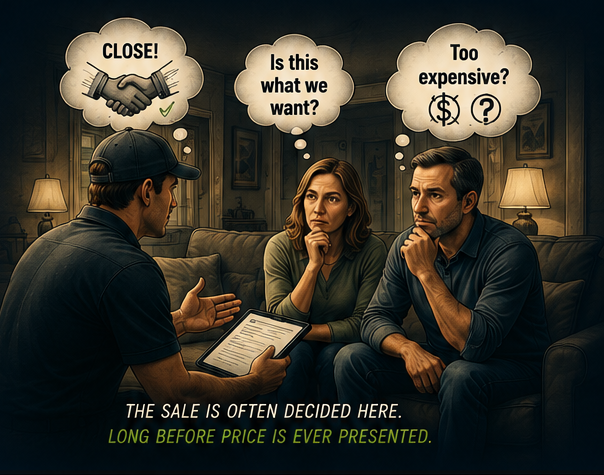
Most Home Improvement Sales are not lost because of price.
They are lost long before price is ever presented.
Every company tracks outcomes.
Very few can see what’s creating them.
▣ 15 minutes. No cost. No obligation.
How confident are you that you’re getting the most value from the leads you already paid for?
Your numbers tell you what happened.
Close Rate
26%
Avg Ticket
$11,400
Demo Rate
68%
Lead Cost
$363
Revenue
$6.3M
They don’t always tell you why.
Why Rep A converts the same opportunities differently from Rep B
Why performance changed
Where homeowner alignment was lost
Whether “bad leads” are actually bad
Why coaching isn’t changing execution
That’s the gap Echo investigates.
Your Sales
Snapshot
The Sales Snapshot looks beneath the surface for signals and underlying areas worth investigating.
- Surface performance patterns worth examining
- Identify underlying areas that may warrant deeper investigation
- Clarify where additional visibility could matter
- Get direction before investing in more leads, training, or price changes
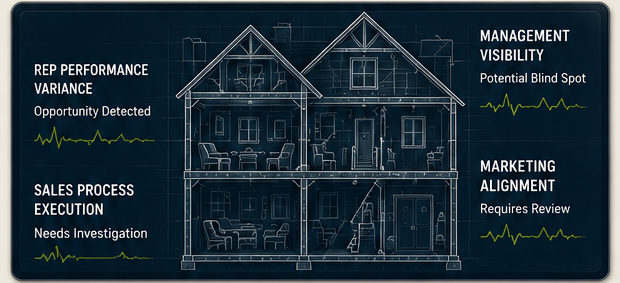
Rep Performance VarianceOpportunity detected
Sales Process ExecutionNeeds investigation
Management VisibilityPotential blind spot
Marketing AlignmentRequires review
Our Process
1
Sales Snapshot
15 minute diagnostic.
Identify the signals that matter.
→
2
Sales System X Ray
Deep analysis and financial impact.
Find the leaks. Quantify the cost.
→
3
Correction & Implementation
Prioritized plan and installation.
Fix what’s costing you revenue.
Ready to see what your numbers aren’t showing you?
Book Your No Cost Sales Snapshot
15 minutes. No cost. No obligation.